
Do Solar Panels Work on Cloudy Days?

Solar energy has become one of the fastest-growing power solutions across India, especially in coastal cities like Vizag where rising electricity costs and increasing awareness about clean energy are motivating households and businesses to switch to renewable sources. While many people understand the financial and environmental advantages of solar energy, a common question still remains: Do solar panels work on cloudy days?This question often arises among homeowners and businesses considering solar panels in Vizag, a city known for both its sunny climate and its occasional monsoons.
The concern is valid — after all, solar panels need sunlight to produce electricity. But the reality is far more reassuring. Solar technology has advanced tremendously, and modern solar PV systems are designed to perform efficiently even under low-light conditions.
In this detailed guide, we will explore how solar panels behave on cloudy days, what affects their performance, how much energy they can still produce, and why this shouldn’t be a concern if you’re planning to invest in solar energy for your home or commercial space. By the end of this article, you will have a clear understanding of why solar remains a reliable and cost-effective power source throughout the year, regardless of weather changes.
Understanding How Solar Panels Generate Electricity
To understand solar performance on cloudy days, it’s important to know how panels generate electricity. Solar panels are made of photovoltaic cells (PV cells) that convert sunlight into direct current (DC) electricity. These cells are designed to react not just to direct sunlight but to all forms of visible light. Even when clouds block the sun, a significant amount of ambient light still reaches the Earth’s surface. That diffused sunlight is enough for modern solar panels to continue operating.
Clouds may reduce the intensity of sunlight, but they cannot block light completely. Solar panels absorb this diffused light and convert it to electricity, though at a lower output compared to bright sunny conditions. This is why solar energy systems can continue functioning even during cloudy days, evenings, and early mornings.
How Cloudy Weather Affects Solar Panel Performance
Cloudy weather can reduce solar energy production because the intensity of light decreases when the sky is covered by clouds. However, reduction does not mean shutdown. In most cases, solar panels operate at 10% to 25% efficiency on very cloudy days and 40% to 60% efficiency on partially cloudy days. This performance range depends on factors like the density of the clouds, panel quality, and overall weather conditions.
In coastal regions such as Vizag, cloud cover is usually moderate, not dense enough to significantly limit solar power generation. Even on monsoon days, light still penetrates cloud layers, enabling panels to produce enough electricity to power essential appliances. Cloudy days might reduce efficiency, but they rarely stop production completely.
Another interesting phenomenon known as the “edge-of-cloud effect” can actually boost power output. When sunlight leaks around cloud edges, it produces sudden bursts of high-intensity light, temporarily increasing solar panel performance beyond normal levels. This is one reason solar systems in partly cloudy regions can still maintain impressive yearly output.
How Much Electricity Do Solar Panels Produce on Cloudy Days?
The actual amount of electricity produced depends on several factors:
Thickness of clouds – Dark, dense clouds reduce production more than light, scattered clouds.
Time of day – Morning and late afternoon already have lower light levels.
Panel technology – Monocrystalline panels perform better in low-light conditions compared to polycrystalline panels.
Location – Cities like Vizag receive plenty of sunlight throughout the year, so annual production remains high even with a few cloudy days.
Season – Monsoon months may see slightly reduced output, but the yearly average remains strong.
On average, solar panels on cloudy days operate between 10% and 60% of their normal capacity. Even at reduced output, your system continues to generate clean electricity that can power lights, fans, chargers, and other basic appliances.
One cloudy day does not have a major impact on long-term solar performance because solar panels are designed to deliver high yearly output. Energy calculations for solar installations rely on annual sunlight availability, not daily variations. Vizag enjoys more than 300 sunny days a year, making it one of the best locations for solar energy adoption.
Even during monsoons, the city receives significant diffused sunlight. The overall return on investment for solar panels remains high because cloudy days are only a small fraction of the year. Once installed, your solar system produces electricity every day, reducing monthly bills and providing long-term savings.
Most households that install solar panels in Vizag experience up to 80% reduction in electricity bills, and in some cases even higher if a battery backup system is included.
Impact of Cloudy Days on Grid-Tied Solar Systems
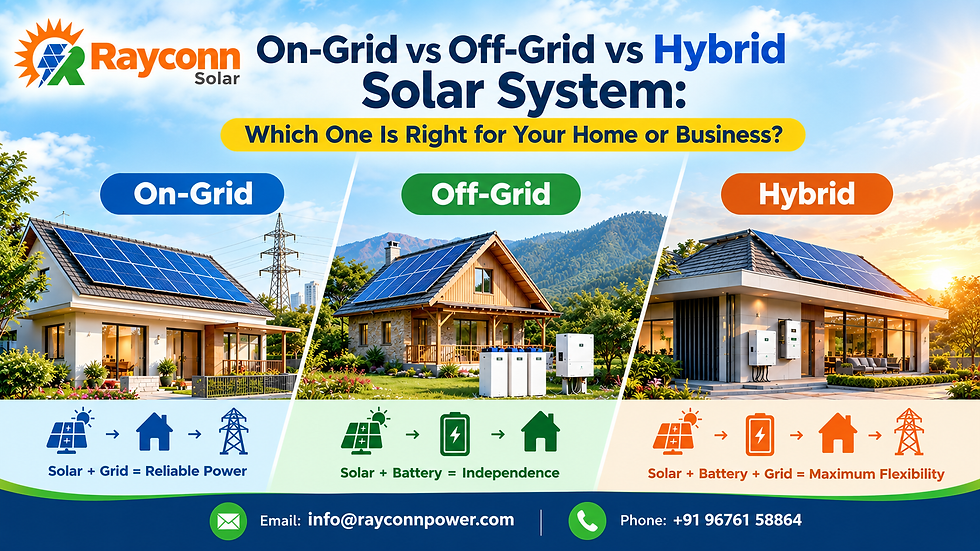
Most installations in Vizag are grid-tied systems. These systems allow you to use solar power when available and switch to grid electricity whenever needed. During cloudy weather, your home may draw more power from the grid, but solar panels continue producing some amount of electricity, reducing the load.
Grid-tied solar systems also come with net-metering, a major advantage for homeowners. When your system generates excess electricity during sunny days, it is sent back to the grid and credited to your electricity bill. These credits can offset the slightly lower production during cloudy days, keeping your monthly bill minimal.
Battery Storage Makes Cloudy Days Irrelevant
One way to make cloudy weather a non-issue is by integrating a battery storage system. A solar battery stores excess electricity generated on sunny days. That stored power can be used during:
Cloudy weather
Nighttime
Power cuts
Peak usage hours
Batteries create energy independence and ensure uninterrupted power. While many households in Vizag choose grid-tied systems without batteries because of lower installation costs, battery-powered hybrid systems offer greater reliability and long-term value. They also protect against voltage fluctuations, which are common during monsoon seasons.
Do Monsoons Affect Solar Panel Performance?
Monsoon seasons do bring regular cloud cover, rainfall, and higher humidity levels. However, these conditions do not drastically impact solar systems. In fact, rain is beneficial for solar panels because it removes dirt, dust, bird droppings, and pollutants that accumulate over time. Clean panels absorb more sunlight and operate more efficiently.
Though sunlight intensity decreases slightly during monsoon months, Vizag continues to receive sufficient light for effective energy production. Annual data shows that monsoon months contribute slightly lower output but not enough to affect yearly performance goals. Solar panels are engineered with weather-resistant materials that withstand heavy rains, moisture, strong winds, and coastal humidity.
This makes solar panels a durable and reliable long-term energy solution even in varied weather conditions.
Why Solar Panels Still Perform Well in Cities with Cloud Cover
Countries like Germany and the United Kingdom — known for cloudy and cold climates — are among the world’s top users of solar energy. This is possible because solar panels don’t rely solely on direct sunlight, and modern solar technology is optimized to perform even in dim light.
Compared to these countries, Indian cities like Vizag have much stronger sunlight exposure. This means that even with cloudy days, solar systems in Indian coastal regions achieve much higher annual productivity than many European locations.
Solar panel efficiency continues improving every year, resulting in better performance in low-light or cloudy weather. The combination of advanced technology, high sunlight availability, and decreasing installation costs makes solar energy highly practical for Indian households and commercial buildings.
Solar Panels in Vizag: Perfect for Coastal Weather
Vizag’s coastal climate includes sunny summers, moderate monsoons, and mild winters — all favorable conditions for solar power generation. The city’s solar potential makes it an ideal location for installing residential, commercial, and industrial solar systems.
Here’s why solar panels in Vizag perform reliably:
Abundant sunlight for most of the year
Low levels of pollution, allowing clearer sunlight
Occasional rains that clean the panels naturally
Stable coastal climate with very few extreme weather disruptions
Even during cloudy or rainy seasons, the city’s diffused sunlight supports consistent energy output. This ensures steady savings on electricity bills and long-term performance without the fear of losing power due to weather fluctuations.
How Solar Inverters Help Optimize Output on Cloudy Days
The inverter is the heart of a solar power system. It converts DC electricity from the panels into usable AC power. Modern inverters come with features that help optimize electricity generation even under cloudy or low-light conditions.
High-efficiency MPPT (Maximum Power Point Tracking) technology adjusts voltage and current levels to achieve the highest possible output at any moment. When clouds pass overhead and sunlight levels fluctuate, MPPT inverters react instantly and maintain reliable energy output. This technology ensures that your solar system works efficiently throughout the day, regardless of changing weather.
Premium solar inverters also come with monitoring apps that allow homeowners to track production levels in real time. This helps you understand how your system performs on sunny, cloudy, and rainy days.
Do Solar Panels Stop Working on Rainy Days?
Rain does not stop panels from working. As long as there is light, solar panels generate power. Rainy days may reduce production temporarily, but they do not halt the system entirely. In fact, rain improves long-term efficiency by washing away dirt and making the panels more reflective.
Coastal cities like Vizag receive frequent but not intense rain, allowing systems to continue functioning at reduced capacity. After a rainy day, solar output typically spikes because freshly cleaned panels absorb more sunlight.
Does Fog Affect Solar Panels?
Fog can lower visibility and reduce sunlight penetration, but its impact is less significant compared to thick clouds. Solar panels can still capture diffused light during foggy mornings. Since fog typically lifts by mid-morning, it rarely causes major reductions in daily solar production.
Because foggy weather is more common in winter, when days are shorter anyway, annual solar performance remains largely unaffected.
Choosing the Right Solar Panels for Better Cloudy-Day Performance
Not all solar panels perform the same on cloudy days. Premium monocrystalline panels offer better efficiency, durability, and low-light performance compared to cheaper polycrystalline options. The glass coating, cell design, and overall engineering also influence performance during cloudy conditions.
Homeowners in Vizag often choose monocrystalline panels because they provide:
Better low-light output
Higher overall efficiency
Longer lifespan
Better performance in coastal humidity
For long-term savings, high-quality panels are always worth the investment.
Why You Should Not Worry About Cloudy Weather When Going Solar
Many potential solar buyers worry that cloudy weather will affect savings, but the truth is that solar systems are designed to deliver consistent output throughout the year. Variations in sunlight are already factored into system sizing and performance calculations. Installers analyze your location’s annual weather data before designing your system, making sure it produces enough electricity regardless of occasional cloudy or rainy days.
Even if your system generates slightly less electricity on cloudy days, the higher production during sunny days makes up for it. Solar energy is a long-term investment, and yearly output is what matters, not daily fluctuations.
Practical Tips to Maximize Solar Output on Cloudy Days
Although you cannot control the weather, you can ensure optimal solar performance by maintaining your system properly. Keeping panels clean, monitoring inverter performance, and removing shade-causing obstacles help maintain efficiency. Cleaning panels after monsoon seasons and trimming trees around your home also ensure maximum light exposure.
Homes with battery storage can utilize excess power generated on sunny days during cloudy periods. Smart load management — such as running heavy appliances during peak sunlight hours — can also optimize your solar usage.
Solar Panels Work — Even on Cloudy Days
The idea that solar panels stop working on cloudy days is one of the most common misconceptions about solar power. In reality, modern solar technology is advanced enough to ensure consistent performance all year long. Cloudy or rainy days may reduce energy output but do not bring production to a halt. With the right system design, high-quality panels, and efficient inverters, you can enjoy uninterrupted solar power regardless of weather fluctuations.
For homeowners and businesses considering solar panels in Vizag, cloudy days should never be a concern. The city’s excellent sunlight availability makes solar a highly reliable and financially rewarding choice. With rising electricity costs and increasing demand for sustainable energy, now is one of the best times to switch to solar.
Whether you’re installing a system for your home or business, working with the right solar partner ensures long-term performance, durability, and maximum savings. Companies like Rayconn Power offer dependable solar solutions that deliver strong output even in varied weather conditions, ensuring that your investment remains productive year after year.
Switching to solar means embracing energy independence, reducing electricity bills, and contributing to a greener future — no matter how cloudy the sky may get.

Comments